Blog

  • BRAND NEW SOFA NOT SO GREAT…

    BRAND NEW SOFA NOT SO GREAT…

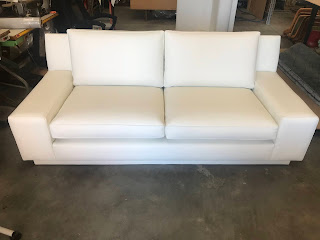
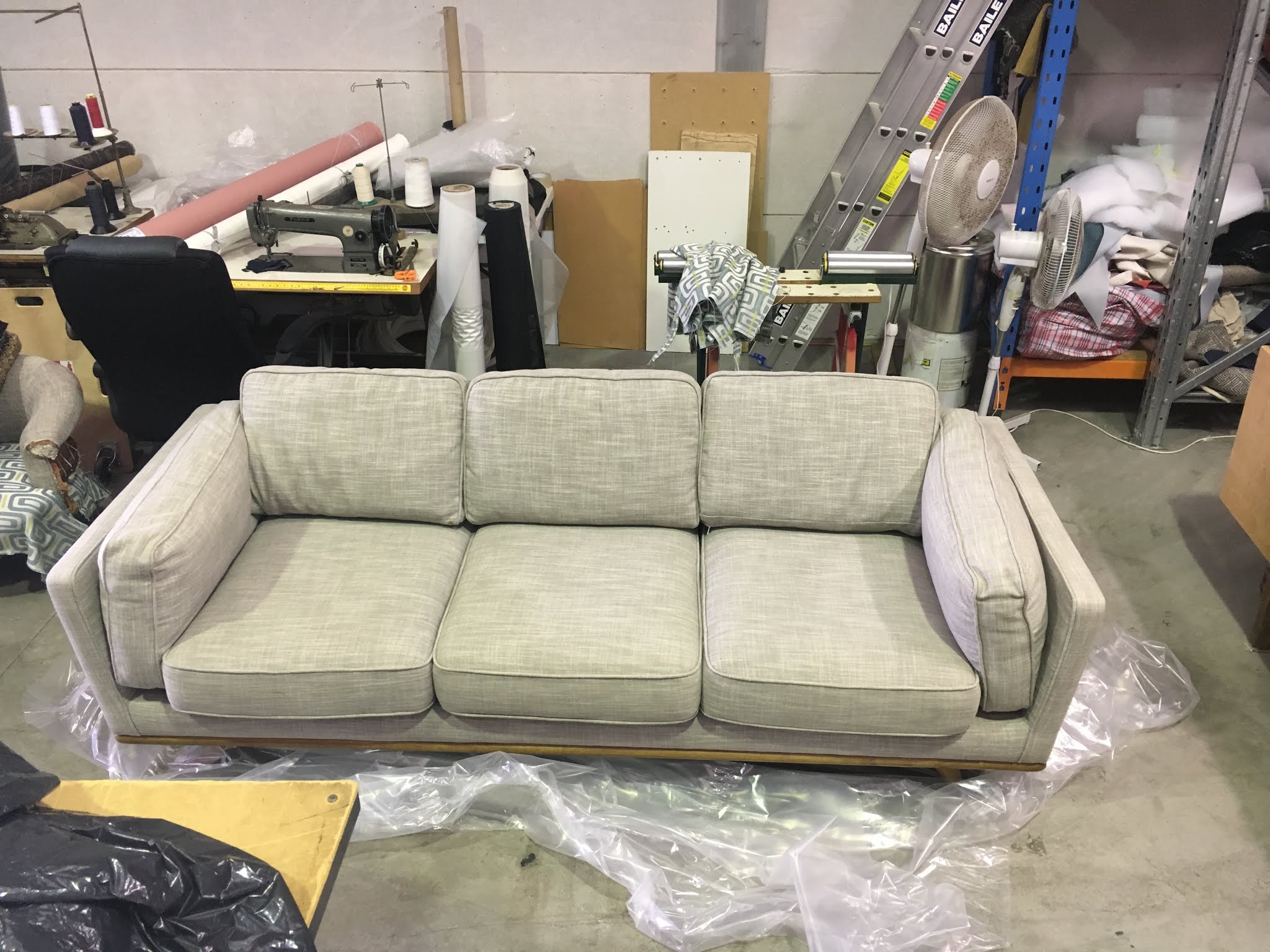
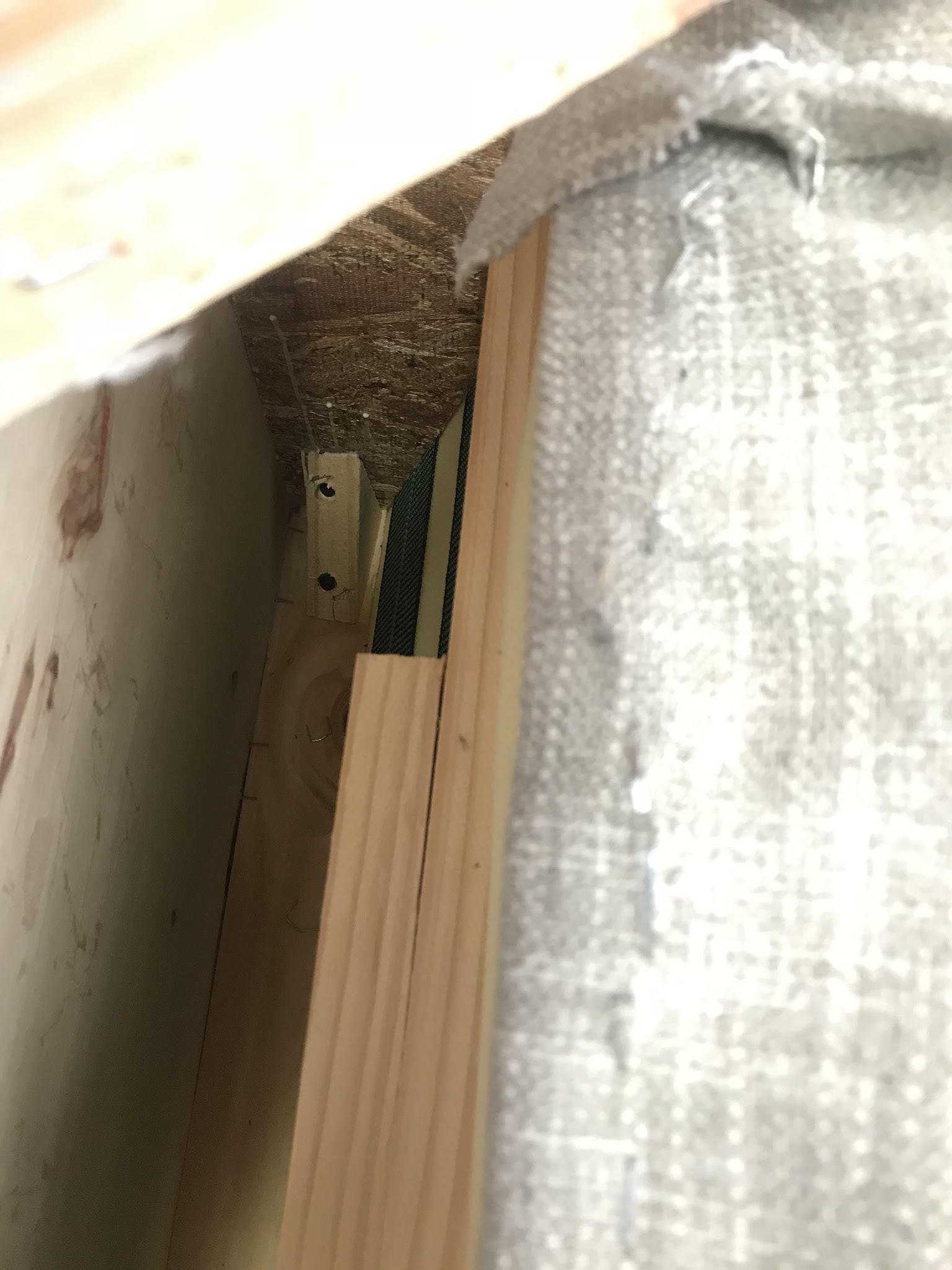
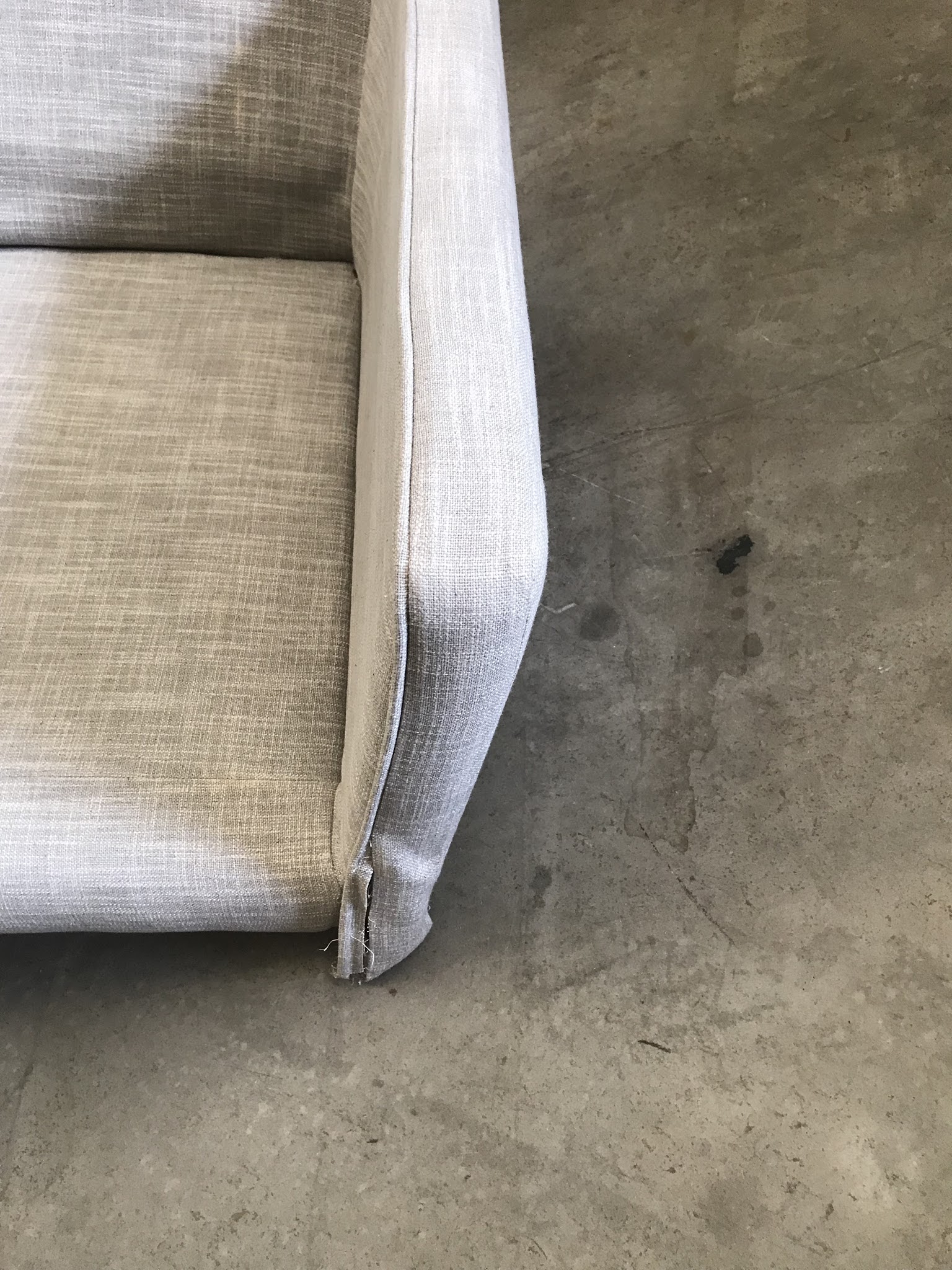
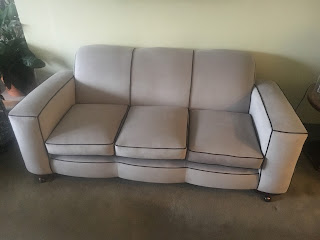
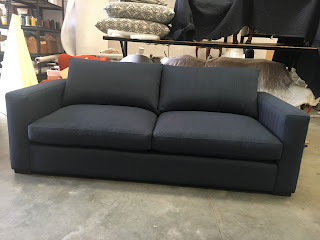
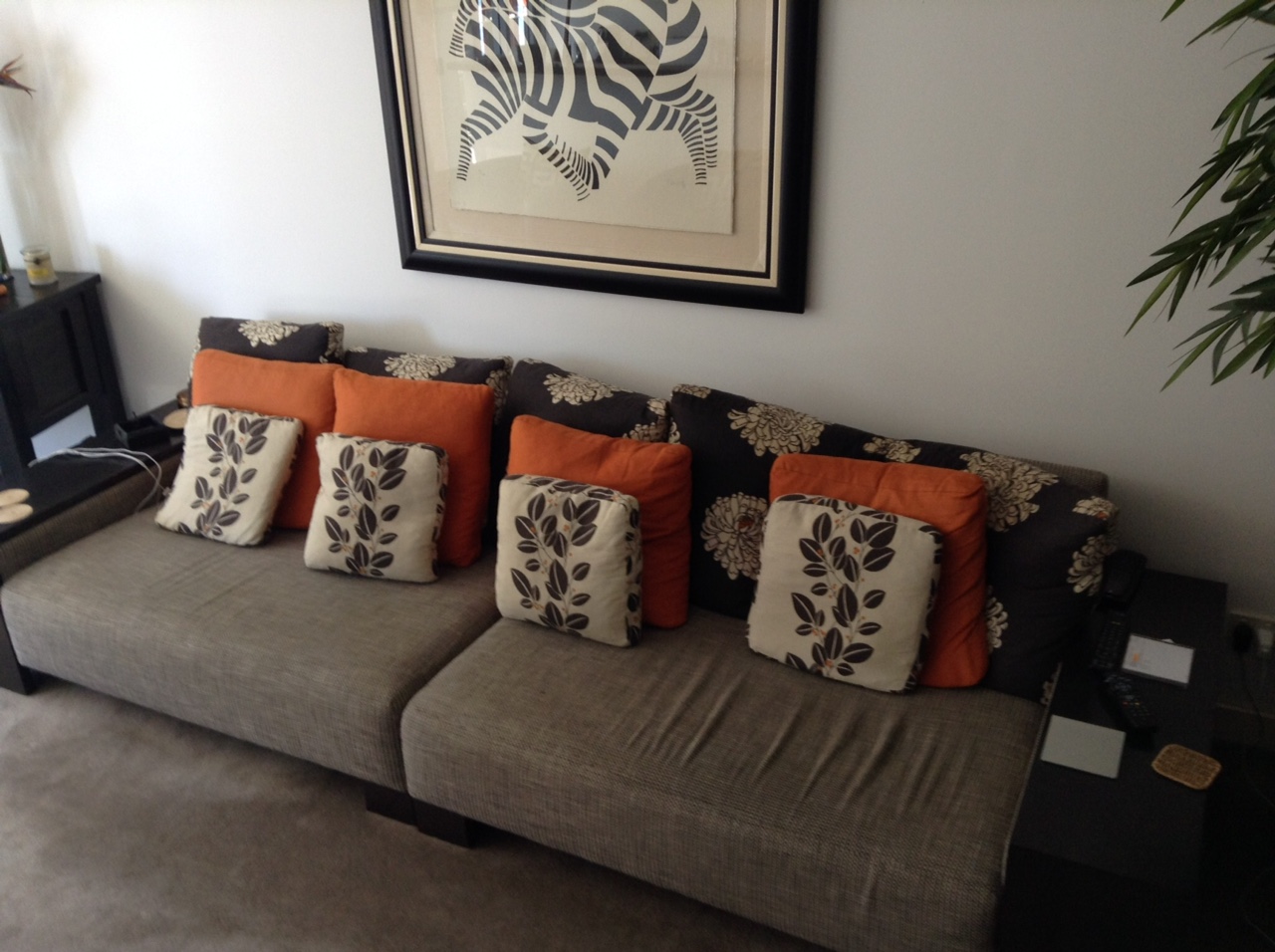
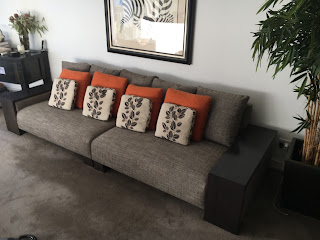
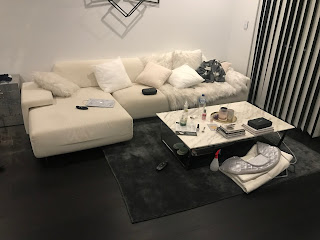
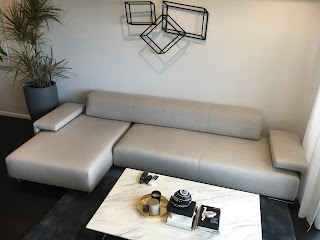
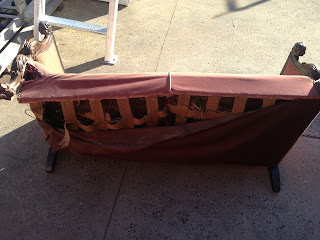
    As you can see in this video, the right arm of this sofa was broken when it arrived to our workshop to be recovered.
    Our customer bought this sofa from a well known retailer where you’re free to buy whatever they have available, to be recovered in leather.
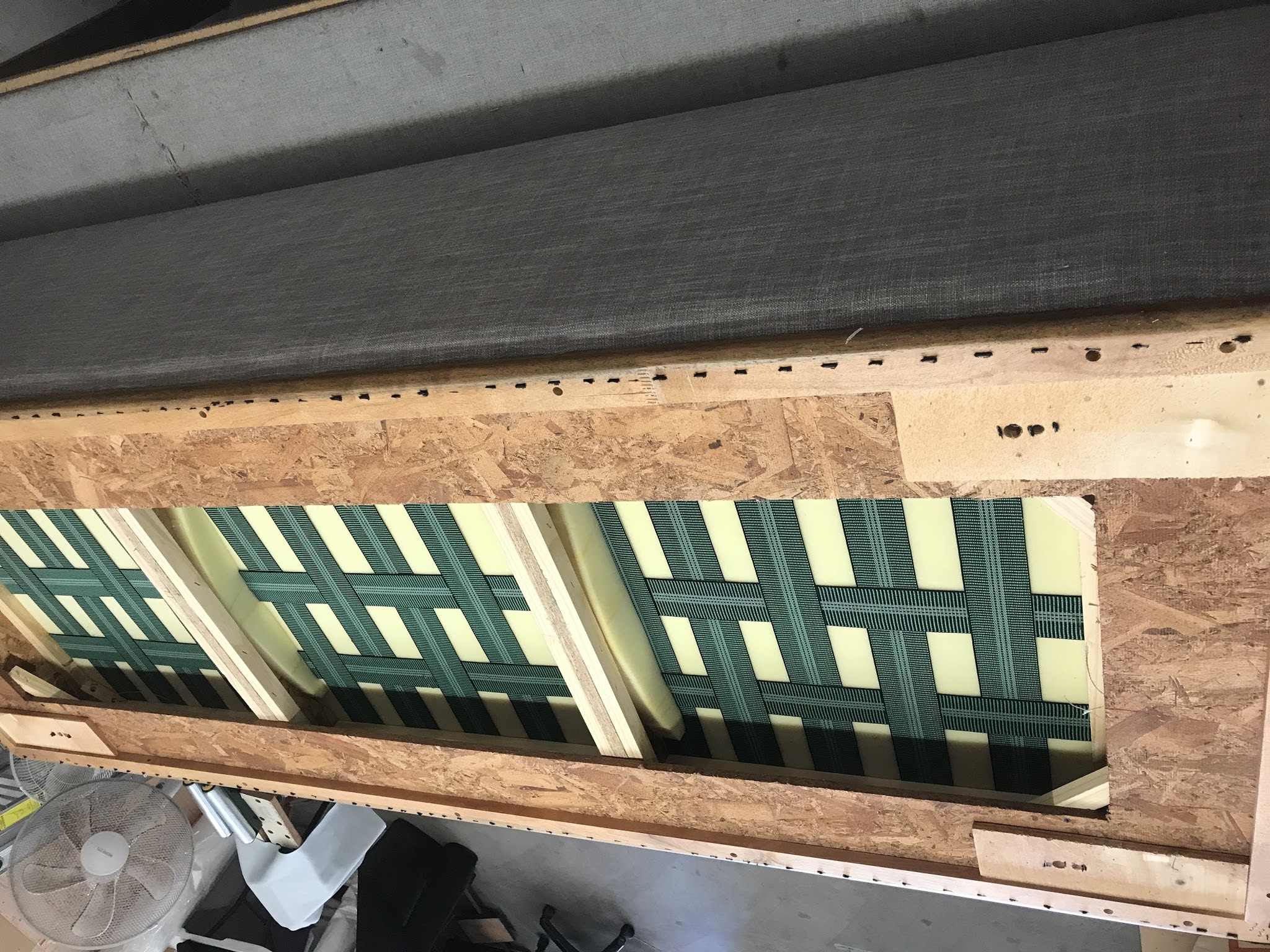
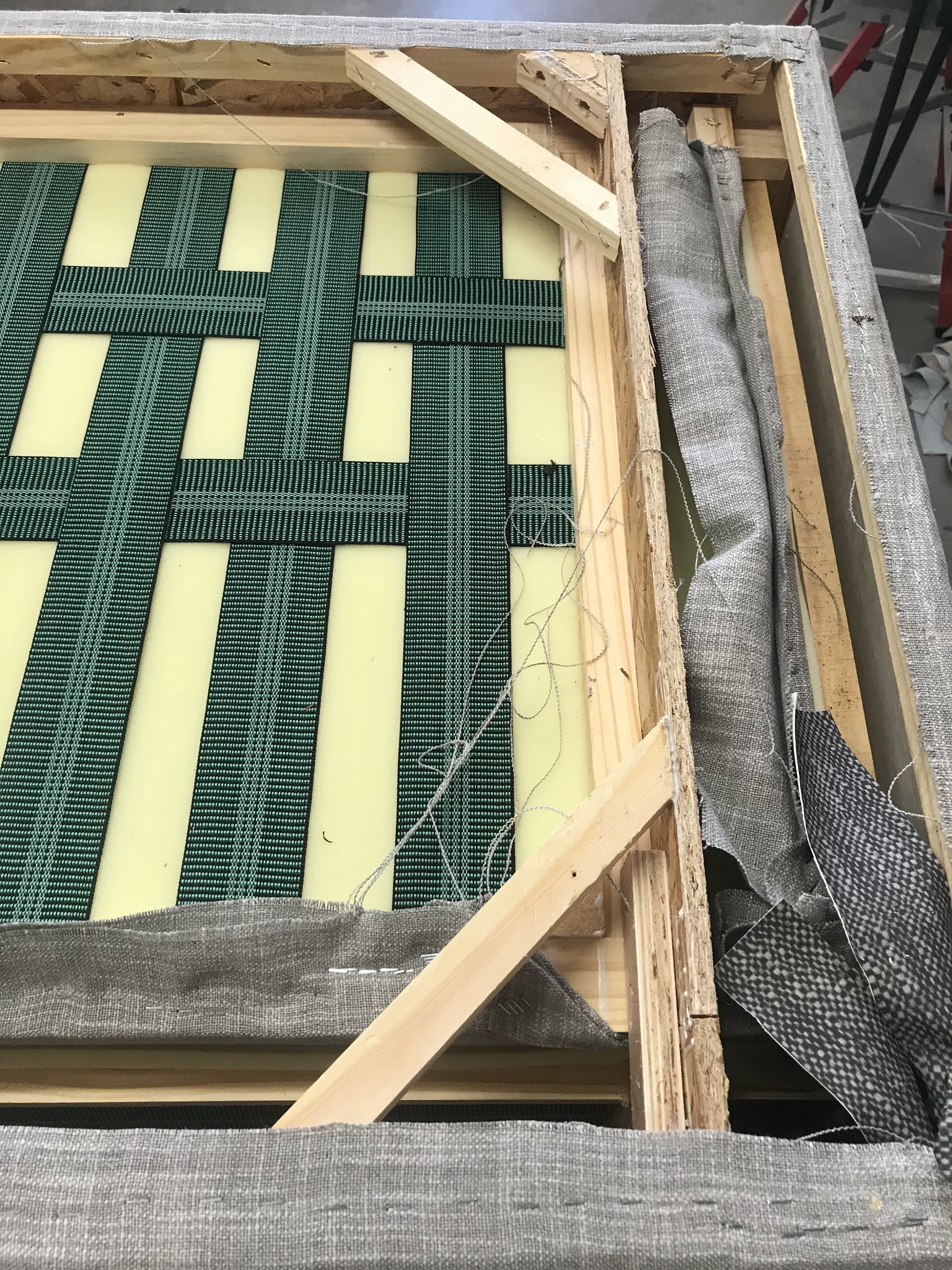
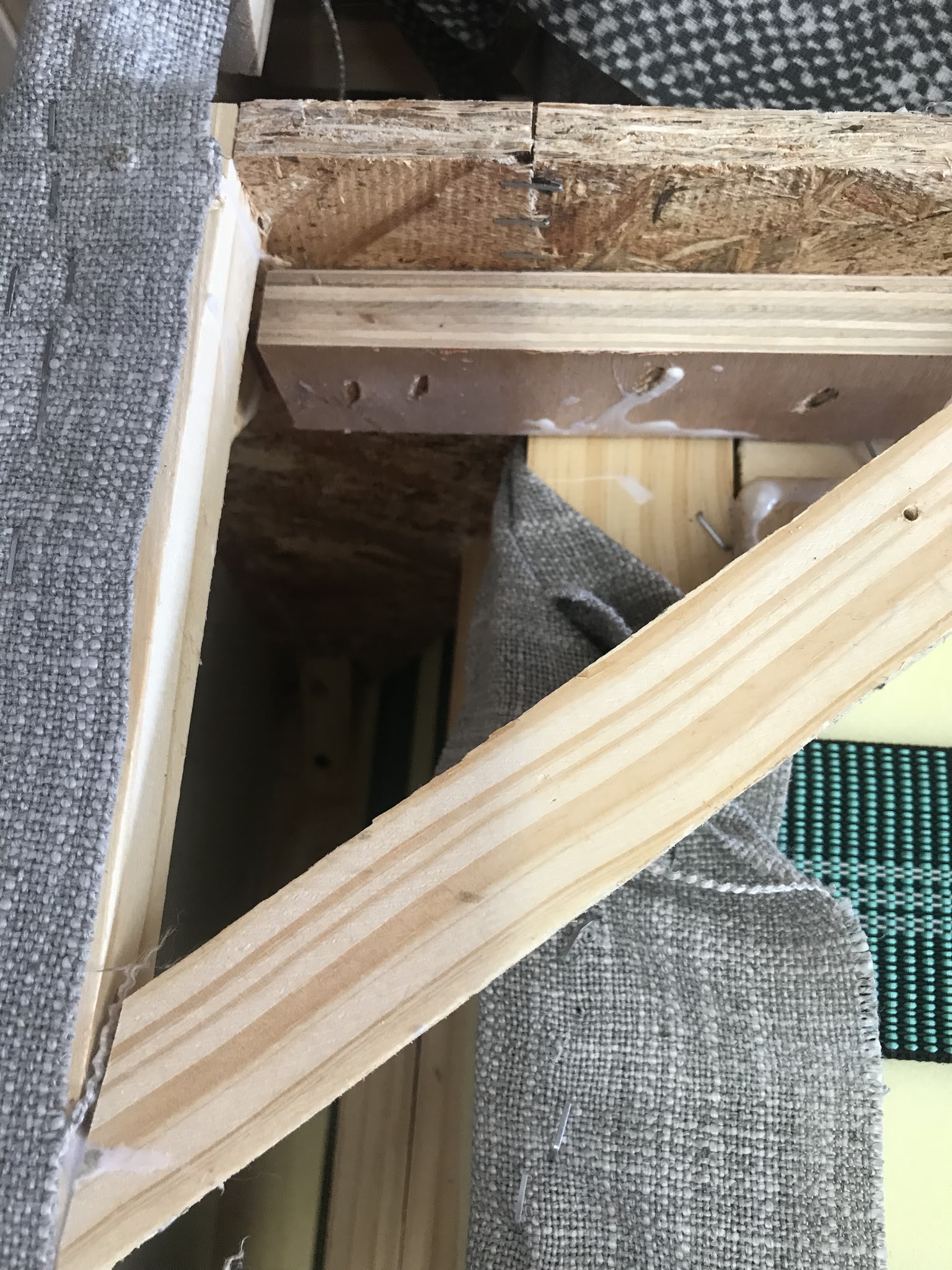
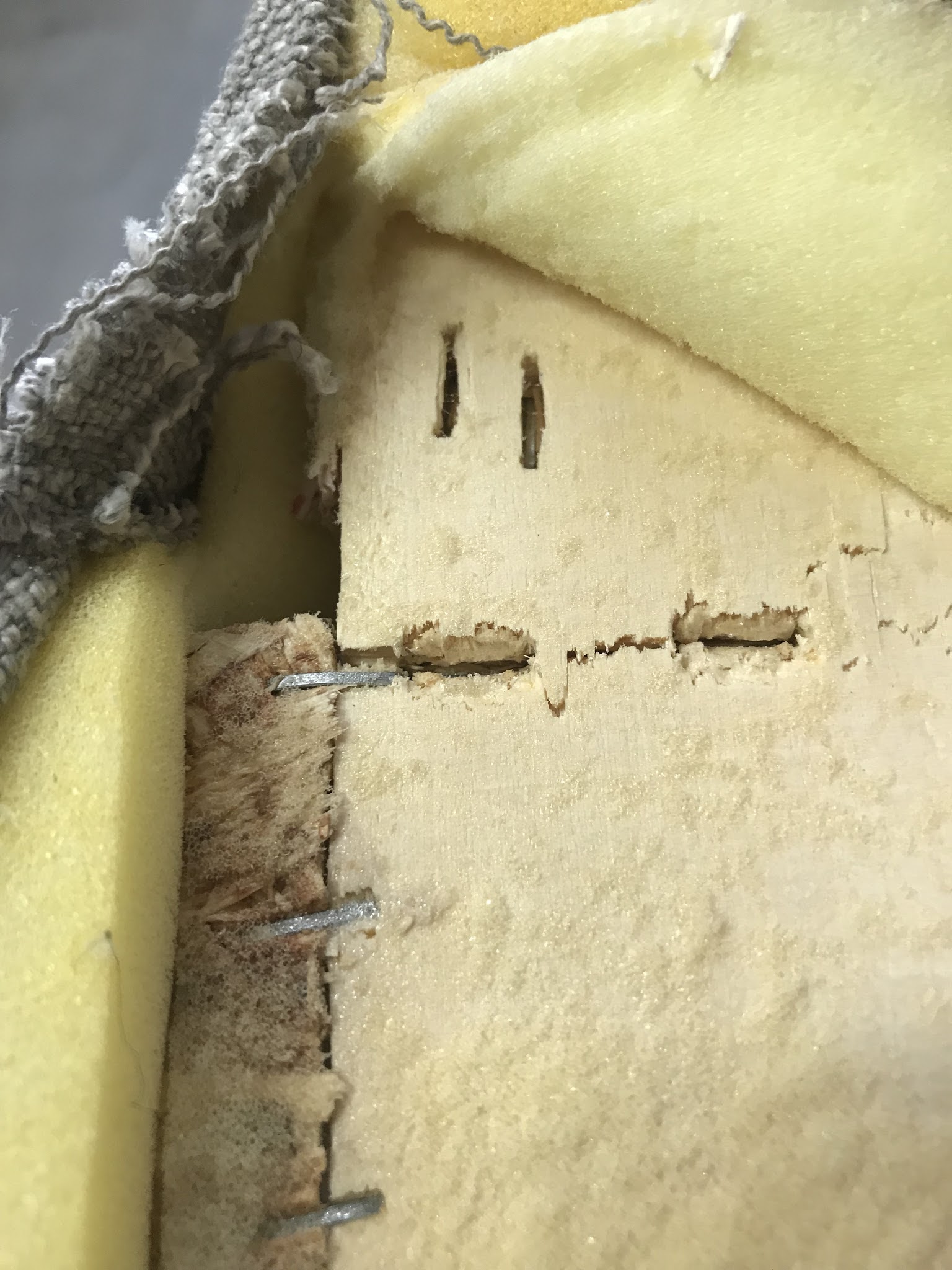
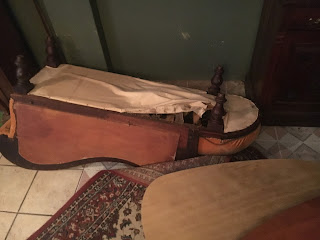
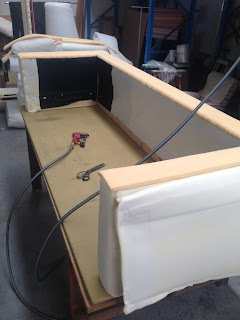
    We had to repair the arm and strengthen other parts to prevent future breakages as the manufacturer in Vietnam obviously could have used a few tips on how to make furniture frames…

    We sometimes get asked why the cost to recover can be around the same as buying a new sofa, maybe this can help answer that question.
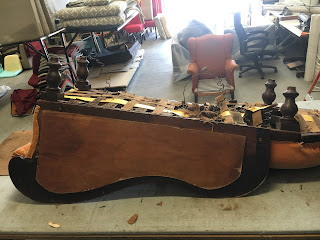
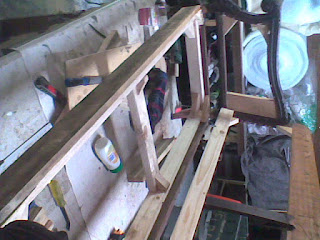
    When furniture is made poorly using poor quality materials (see the particle board support rails), by people who are paid $1 per day, you cannot expect that item to be recovered here in Australia with our high wages and overheads etc for any less.
    The Australian retailer will have paid the Vietnamese supplier a very small fraction of the actual sale price. Maybe once we establish what that price was it will make the recover cost seem more reasonable.
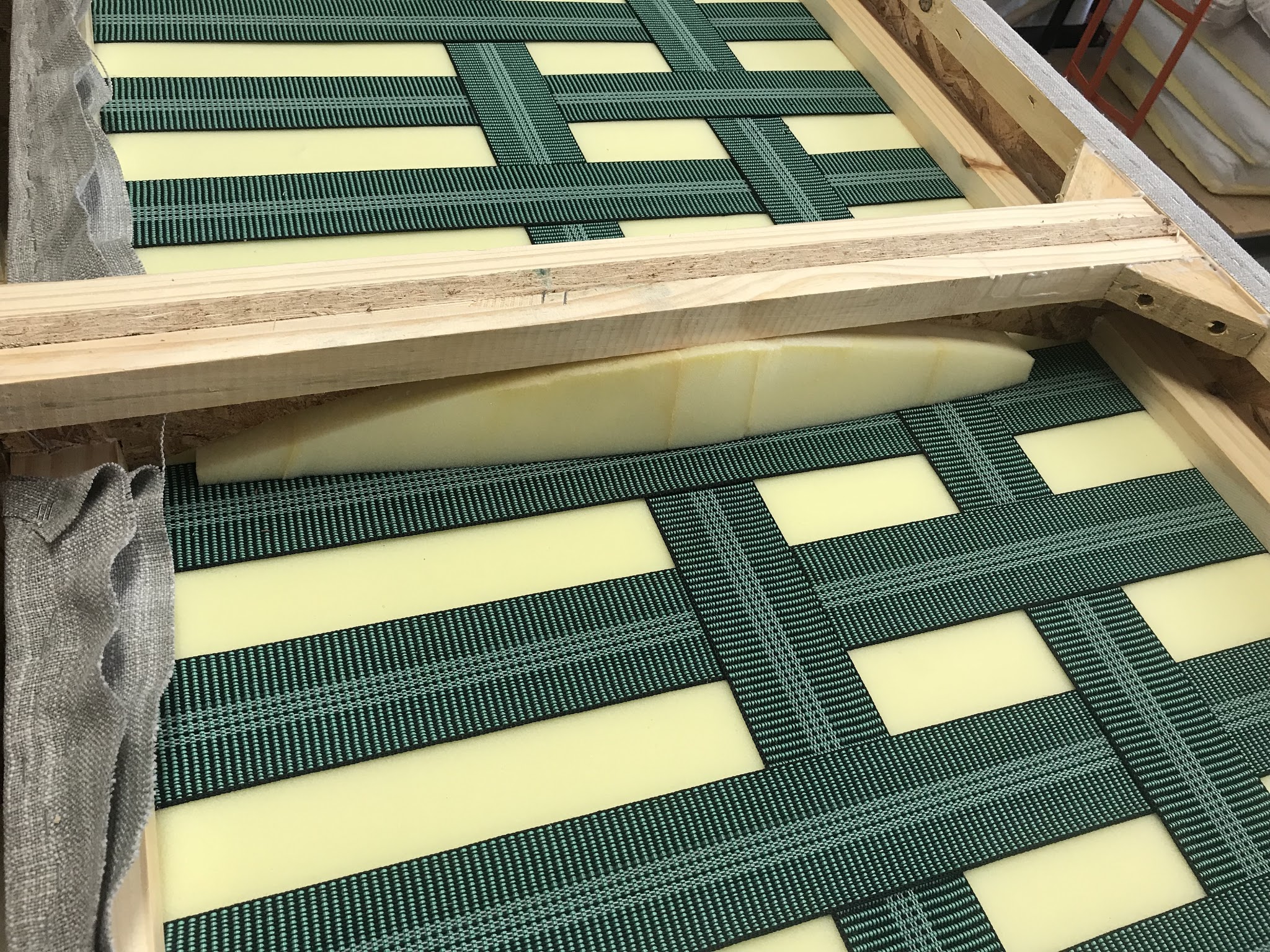
    Did I mention the filling used in the cushions is also rubbish, so in a couple of years the cushioning is going to look flat and out of shape, and feel uncomfortable to sit on.

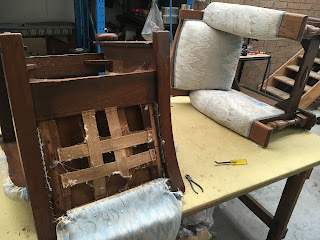
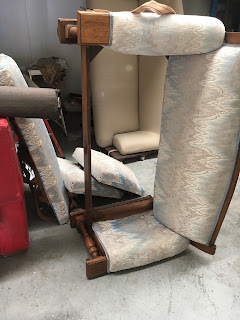
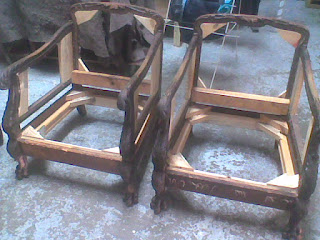
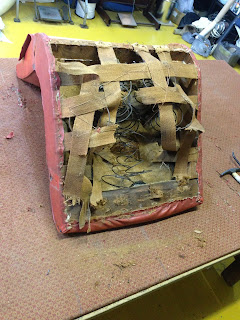
    See these pics of the frame to understand the quality (or LACK of) of this furniture. I’ve seen better quality firewood!

    You would be far better of buying an older secondhand piece that was made when people still cared about quality, and have it recovered by Cover It Upholstery Sydney

  • Its About Customer Service

    Its About Customer Service

    When it comes to upholstery its all about delivering quality workmanship and customer service.

    We help with fabric selection, logistics and deliver quality work to ensure all of our customers are 100% happy with our upholstery service!
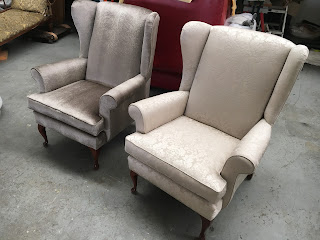
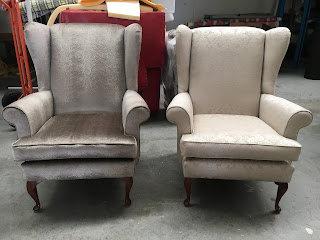
    Hi Marcel,
    Thank you so much for dropping off the chairs – they are
    fantastic!
    I’m SO pleased with them and really want to thank you for
    an amazing service – from the original enquiry, right through to the pick up
    and delivery and finished product!  I
    would highly recommend Cover-It!
    Many thanks,
    Margot.


    Upholsterers, Upholstery, Re-Upholster, Recover,
    Restoration, Antique, Lounge, Sofa, Chair, Cushion, Fabric, Leather, Upholstery
    Sydney, Upholstery Inner West, Upholstery Eastern Suburbs, Upholstery Northern
    Beaches, Upholstery Sutherland Shire, Upholstery Sydney CBD, Antique
    Restoration, French Polishing, Furniture Repairs, Foam, Loose Covers, Ottoman,
    Armchair, Bed Head, Scatter Cushions, Soft Furnishings, Free Quotes, All
    Suburbs,

    Upholsterers, Upholstery, Re-Upholster, Recover,
    Restoration, Antique, Lounge, Sofa, Chair, Cushion, Fabric, Leather, Antiques,
    Polishing, Furniture Repairs, Loose Covers, Ottoman, Armchair, Soft Furnishings
    At Cover It Upholstery Sydney we strive to give you the
    highest quality workmanship and service. We come to you with fabric, vinyl or
    leather samples. We service all suburbs of Sydney including: Inner West,
    Eastern Suburbs, Northern Beaches, Sydney CBD, Sutherland Shire.
    Cover It Upholstery Sydney has vast experience in all manner of upholstery work, ranging from
    traditional applications such as diamond buttoning and spring edge work, to the
    more modern styles of today, including any custom made furniture you require.
    We can assist you
    with any furniture restoration and re-upholstery project, whether residential
    or commercial, working with private customers as well as many architects and
    Interior Designers on a range of interesting projects that include restaurants,
    clubs and corporate.
    We service all
    suburbs of Sydney!

    Interesting….
    the pile on the Warlock swatches appears to be more compact than the Warlock
    showroom sample library. I recall that the Zepel showroom samples of Warlock
    have a pile that reminded me of the look and feel of Warwick’s Mystere range.
    Whilst I accept that one of the challenges with any velvet is that it shows
    rubbings and marks when the pile direction is altered, the Warlock velvet seems
    to show these marks more easily than any of the other velvet samples I have. It
    also seems harder to brush the pile on the Warlock to reduce or eliminate these
    marks when they occur and a “ghosting” image of the rub seems to remain faintly
    visible. Also, in the showroom samples of the Warlock velvet, there is one
    sample that is quite large – looks to be at least half metre or more of the
    fabric. You can see on this larger sample where people have rubbed the pile. It
    even looked a bit like the pile was beginning permanently to mat/congeal a
    little on the site of the rubbing??
     Apologies for taking so long to pick a fabric for my chairs
    but I can reassure you that I have been actively looking at fabrics. It’s a fun
    process but at the same time, I’m a bit over it but pressing on. I now have
    around 40 samples of various styles and colours of fabric in the grey range and
    have looked at heaps more. I’ve limited my search to Warwick, Wortley and Zepel
    fabrics. I’m finding that grey is not an easy colour to work with because of
    the blue, green, brown and purple tints used and how this impacts on the final
    grey colour and how it looks in situ. The chairs were originally covered in a heavy damask silk
    and are currently covered in a chenille type fabric. I don’t want to go down
    the silk route.  I also don’t particularly want plain self-textured
    jacquard type fabrics because they look too rustic and coarse on the chairs. So
    I’ve decided as an alternative that I want to keep the fabric very plain with a
    preference for a soft feel plain fabric. It’s what looks best on the style of
    chairs and the contrast of grey against the blond wood looks great. Easier said
    than done!
    At first I tried to avoid velvets and was looking at other
    soft feel fabrics that look like a close pile velvet but aren’t (Zepel’s
    Ottoman Drizzle, Wortley Touch Pewter) but with no luck. Back in the velvet
    space, it seems to me that there’s a big difference in the range and types of
    velvet. I’ve limited myself to 100% polyester. At this stage, I’m leaning
    towards a Warwick velvet called Cleo.  Cleo has quite a close, dense and
    tight pile. The colours I’m looking at in the Cleo range are Gull, Armour and
    Flint and I have reasonably decent sized samples of these colours. The other range of velvets that have a good selection of
    greys that I like is Zepel’s Warlock velvet (Aluminium, Slate and Metal) but
    this velvet has a much more plush pile than Cleo and I’m not sure I’m
    comfortable with that.  I don’t have any samples of Warlock velvet but
    have seen it in their Rushcutters Bay showroom. Whilst I wouldn’t mind getting
    some Warlock samples, the samples Zepel has sent me via you in the past are so
    small (about 8cm square), it’s hardly worthwhile getting them. Not to mention,
    Zepel will not tell me the price of the fabric either. At least Warwick and
    Wortley will give you price ranges.

  • Top 25 Most Popular Home Improvement Services for 2017

    Top 25 Most Popular Home Improvement Services for 2017

    Yes Cover It Upholstery Sydney has done it again!

    Awarded:

    Top 25 Most Popular Home Improvement
    Services for 2017

    The
    HomeImprovement2day Team is excited that your business has been listed in our
    Top 25 Most Popular Home Improvement Services for 2017.
    Here
    is how you have ranked:
    Congratulations
    and keep up the great work!
    These
    rankings have been allocated by location to the businesses with the highest
    number of visits, positive reviews and overall engagement across the
    HomeImprovement2day website.

    It’s been a busy start to the year!
    Already a number of testimonials to share with you

    Hi Marcel

    Thanks for bringing back the couch today! Love it!
    Payment all made.
    Thanks Jess


    Hi
    Marcel,
    Thank
    you for such a wonderful job, we are so very pleased with the lounge suite.
    Regards,
    Chris
    Treweek


    Hi
    Marcel
    The
    dining room chairs are excellent thank you.  
    Many thanks Phil 
    Hi
    Marcel,  
    All
    paid and thank you again. It looks great and we really appreciate the speedy
    turnaround. 
    I
    will be in touch once we have saved up to do the other two chairs later this
    year. 
    Regards, 
    Keith
    Hi Marcel  
    I really like the sofa, I’ve had lots of compliments for it,
    and it is very comfortable. Kitty loves it too.
    And the first small commercial job completed
    See you soon for more updates on completed jobs!

  • ANTIQUE FURNITURE – Chair types and history – PRT 2

    ANTIQUE FURNITURE – Chair types and history – PRT 2

    HAPPY NEW YEAR!
    Cover It Upholstery was established in December 1998 so we are about to start our 20th year in business!
    To start the year I’ll post the second and final part about antique chair types, and a few photos of a couple of recent commercial jobs completed late last year.
    Hall Chairs 
    Hall chairs were made for large houses, and were
    often carved impressively with the crests or coats-of-arms of the owners. The
    seat was often slightly dished so that the sitter did not slide off the highly
    polished surface, but they offered no comfort, and were specifically intended
    for messengers or others waiting in their outdoor clothes.
    Library Chairs
    Library or club armchairs, made for
    gentlemen’s clubs, were produced from around 1830. They were usually made from
    mahogany, but were also produced in oak or rosewood. A chair of this date would
    not originally have had casters, and these would have been added during the
    Victorian era. The use of leather upholstery on Victorian tub-shaped chairs was
    popular. The leather is unlikely to be original, but should ideally be old and
    in good condition as it is expensive to replace.
    Victorian Chairs 
    Although chairs from the William IV and
    Victorian periods may lack the style and elegance of earlier chairs, they are
    often very well made. The best examples, with elegant French style cabriole
    legs, are classics of English design. Single chairs were essential in the
    drawing room for accommodating the wide skirts worn by ladies at that time, and
    consequently the seats were often slightly narrowed at the sides, with
    serpentine fronts. The French rococo style was popular for the boudoir and
    bedroom during the early Victorian period, often made of walnut, gilded or
    painted soft woods, or papier mache. Sheraton and Hepplewhite designs were
    reproduced from the 1870s onwards.
    Settees and Sofas 
    The word ‘settee’ was used throughout the
    18thC to describe any appropriate piece of seat furniture, whether it had a
    carved or upholstered back, while the term ‘sofa’ came to be applied just to
    more heavily upholstered examples. Now the words are almost interchangeable.
    Most settees of the 18thC, whether upholstered or carved, formed parts of
    suites and as such their designs matched those of the chairs in the suites.
    Also, since they were made to stand against walls, their backs were plain and
    unadorned. The elegant, French-influenced designs of the late 18thC gave way to
    far heavier and extravagantly shaped pieces during the period of the Regency of
    the reigns of George IV and William IV By 1860, the French taste had once again
    brought a lighter touch to the form of Victorian furniture, and the settee and
    the now popular chaise longue had taken on new curvaceous, organic lines.
    During the last quarter of the century the sumptuously upholstered and buttoned
    Chesterfield gained a level of popularity which it has never really
    relinquished.
    Corner Chairs
    Corner chairs are usually found singly rather
    than in pairs or sets. Good quality examples are found in rosewood, mahogany
    and walnut. More basic corner chairs are in oak and other country woods, such
    as elm, and have straight legs and no carving.
    Windsor Chairs
    Windsor chairs were unknown before 1720s, and
    were originally found in Georgian taverns and coffee houses. The earliest
    examples have comb backs, plain turned splayed legs, and no stretchers.
    Cabriole legs suggest a date between 1740 and 1770. The hooped back was
    introduced c1740, and the wheel splat around 1790. Gothic Windsors, recognised
    by the carving of their splats and their pointed arch backs, were made between
    1760 and 1800. The most desirable wood is yew, followed by elm, but mahogany
    examples are always of good quality. Curved stretchers, carved and
    well-proportioned backs also add to the value. Some better quality Windsor
    chairs were stained black or japanned black or green, and are more valuable in
    original condition — do not strip them.
    Sets of Chairs 
    The demand for large sets of dining chairs is
    very strong so the price which has to be paid for a set of, say, ten or twelve
    chairs will work out considerably higher per chair than for the equivalent set
    of six. The presence of a pair of armchairs in a set will increase the purchase
    price further. Look out for repairs and alterations in any large set. Legs or
    feet may have been spliced to repair breaks; stretchers are often not original
    and sometimes seat rails have been replaced.

    Dating Chairs 
    Although there are few hard and fast rules
    when dating chairs there are certain pointers which can be looked for. One of
    these is to examine the way the seat frame is braced for strength. In the 18thC
    this was achieved by fitting and sticking a thin strut of wood across the front
    corners of the frame. In the 19thC this technique was quickly superseded by
    sticking and screwing a solid block into each corner. Although many 18thC
    chairs have had their original struts replaced with the stronger and more
    durable blocks, the notches in the frame where the struts originally fitted
    should still be visible.
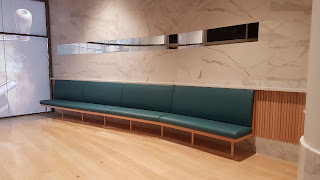
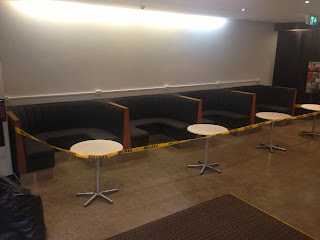
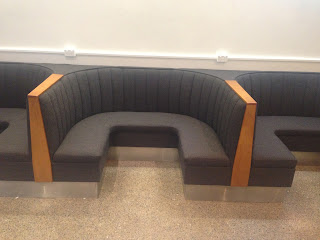
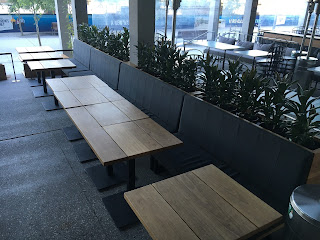
    2 RECENT COMMERCIAL BENCH SEATING JOBS BY COVER IT UPHOLSTERY SYDNEY

    As we begin the year next week on the 29th of Jan I would just like to remind you we service ALL SUBURBS OF SYDNEY, so just email a photo of your furniture to be recovered and describe what needs to be done to [email protected] and I’ll get back with an estimate after which we could possibly sort out a fabric or leather selection on which to base a firm quote.
    Should a quote be accepted I would then ask you for a 1/3 deposit (50% commercial customers) and book the job in and order any materials required.

  • BUILT IN OBSOLESCENCE

    BUILT IN OBSOLESCENCE

    BUILT IN OBSOLESCENCE
    Another good reason to recover is that over time it works
    out to be cheaper than buying new furniture, this is because if for example you
    buy a set of dining chairs at $300 each and you only get 3 to 5 years out of
    them before they would need replacing or recovering due to manufacturers using
    cheap materials to cover them and poor quality foam, you would then spend
    another $300 and get 3 to 5 years again, and so on.                                                                                            
              
    If
    instead of buying new ones again you decide to recover the original chairs with
    a good quality fabric and replace the foam using Dunlop Enduro foam you would
    get at least 10 years or more out of them and would cost around say $200 to
    $250 each. So this would save you having to buy new ones around 2 or 3 times.

    The same goes for lounge furniture, a good example of this
    is the recover work we do for a university, they buy good quality furniture but
    because it’s in such high traffic environment the fabric gets dirty and can
    even wear out in a two to three year period, if they were then to spend another
    2.5/3K to replace the sofa it would cost much more over a 10 year period then
    if they were to recover the sofa 2 or 3 times for around $1200 each time over
    the same 10 year period. Would be under 4K over a 10 year period compared to
    around $10K buying new each time.
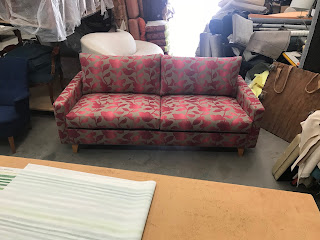
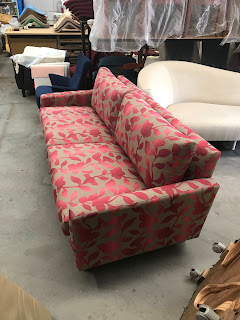
    Below are a few recent jobs completed.
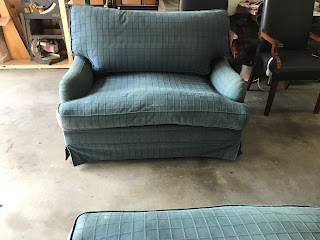
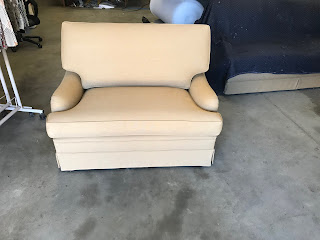
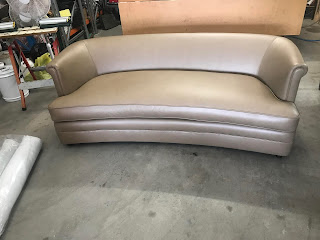
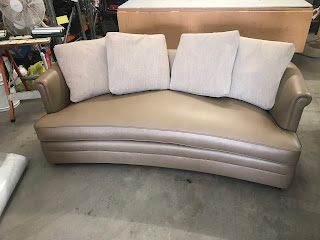
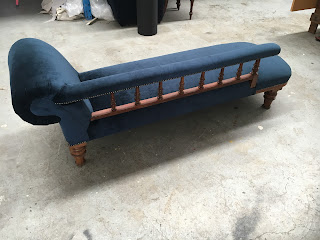
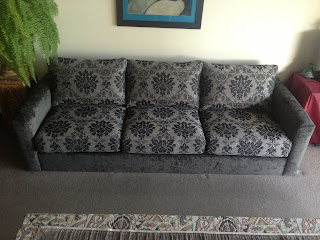
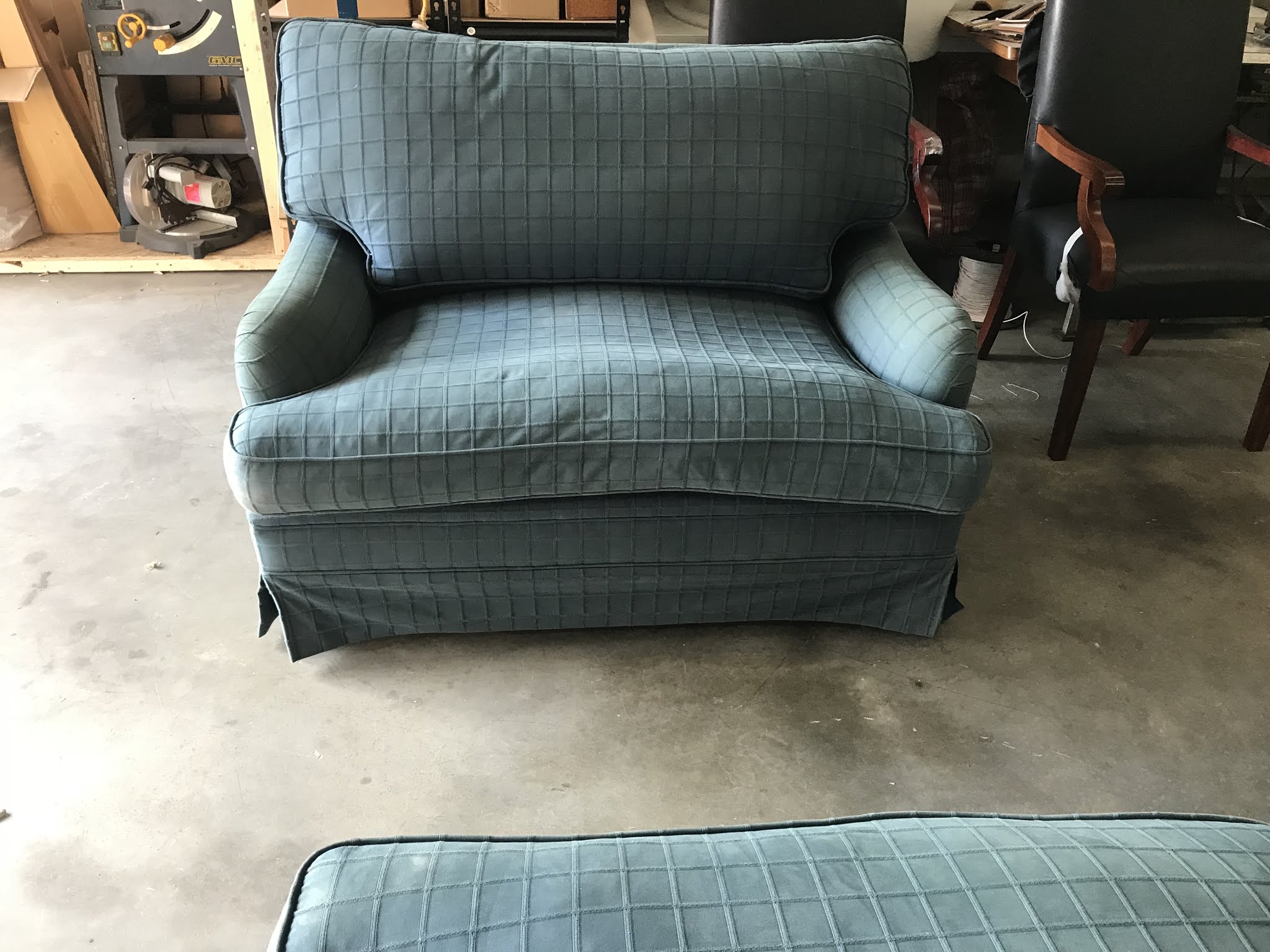
                                                         Jimmy Possum 3.5 seater sofa
                                                                              BEFORE
    AFTER
                                         
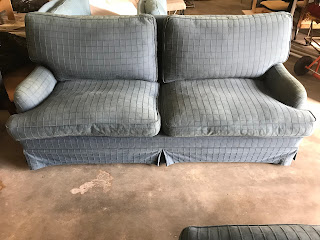
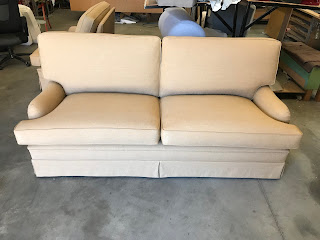
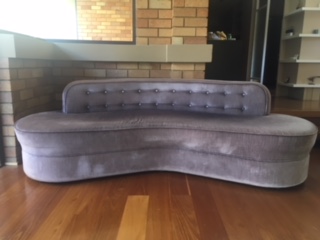
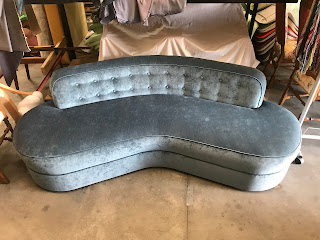
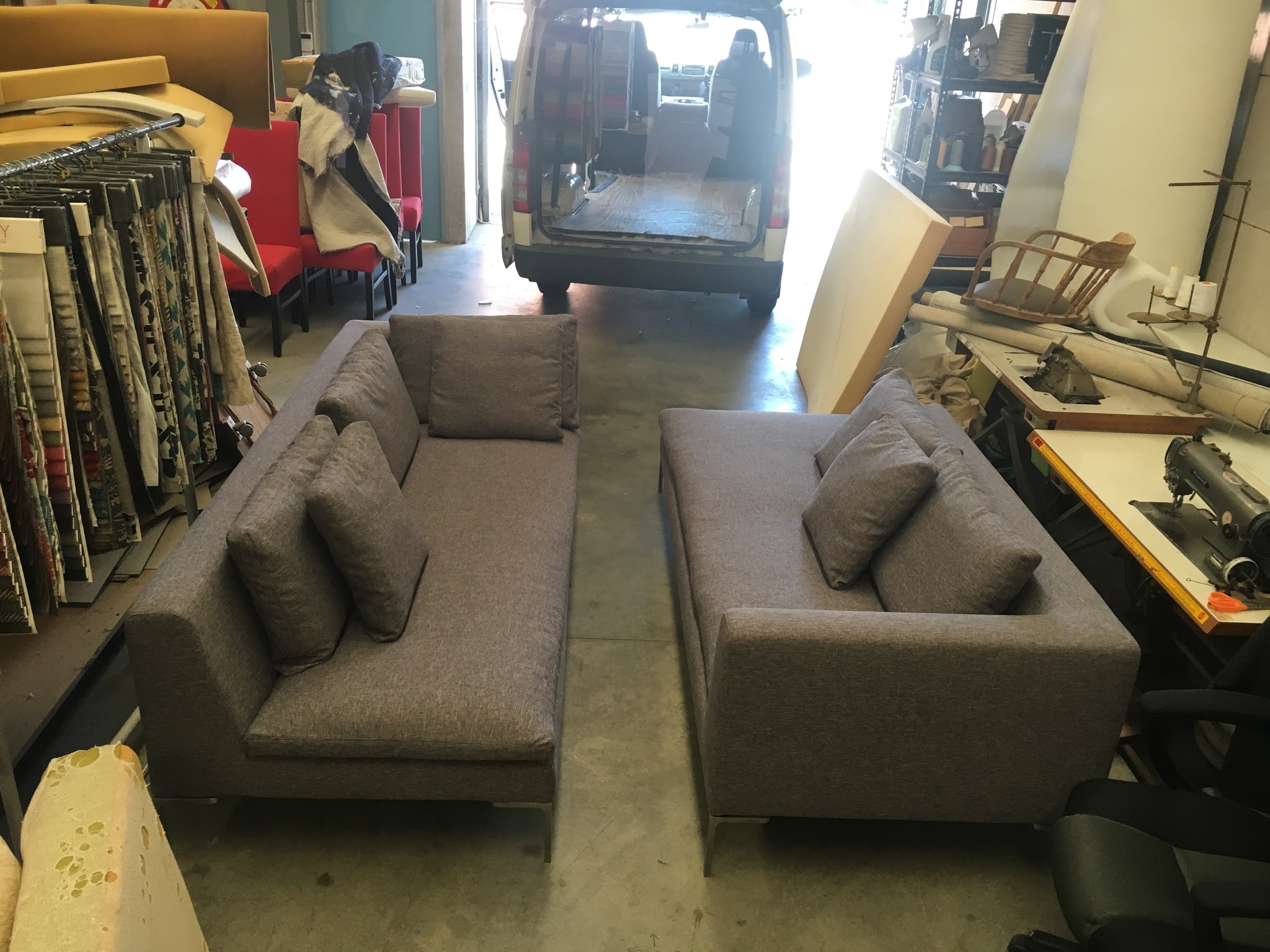
                                                                 Moroso lounge suite
                                                                      BEFORE
      
                                                                      AFTER
                                                                   Tapavino restaurant
                                                                           BEFORE
                                                                          AFTER

                                  Fabric Care and Cleaning

    Alcoholic Beverages 
    After the moisture has been blotted up,
    dab at the stain with a clean cloth dampened in rubbing alcohol. Then blot
    repeatedly with liquid detergent mixed with cool water. Blot dry with a towel.
    Dab again with clear cool water and blot dry.
    Blood 
    Mix one teaspoon of ammonia in a cup of cold water and
    apply it sparingly to the spot. Blot with a clean towel. Repeat the procedure
    until the spot is gone. Then dab the area with cool water and blot. Wait 15
    minutes and moisten the area again with white distilled vinegar. Blot
    thoroughly with a dry towel.
    Chenille Yarn Fabrics 
    Shampoo cleaning or hot-water
    extraction, taking care to restore the pile orientation in finishing will
    produce a satisfactory result. Care must be taken not to undertake concentrated
    rubbing on a small area, which may produce irreversible disruption of the
    chenille fibre. It should be noted that even the simple act of wetting the
    fabric is likely to produce an appearance change even if the chenille fibre is
    not disrupted. This is largely due to flattening of the chenille fibre while it
    is wet and may result in a ‘dappled’ or ‘mottled’ surface. Warning: Some high
    pile viscose rayon chenilles, velvets and pocket weave jacquards may change in
    surface character if stain repellent treatments are applied. Extra care should
    be taken to pre-test for these fabrics. Chewing Gum Rub an ice cube over the
    gum to harden it, then scrape off the excess with a dull knife. To remove
    what’s left, use dry cleaning fluid. Chocolate and other soft candy) This is a
    .combination greasy/non-greasy stain. Scrape excess away, then go over the spot
    with cool water mixed with a liquid detergent. Blot thoroughly and then clean
    with dry cleaning fluid.
    Coffee and Tea 
    Sponge with warm water. Apply warm glycerine.
    Leave for 30 minutes. Flush out with water and dry quickly.
    Cosmetics 
    Sponge with warm water. Apply warm glycerine.
    Leave for 30 minutes. Flush out with water and dry quickly.
    Fruit and Fruit Juices 
    After excess is blotted up or scraped
    away, blot the spot with cool water. If a stain remains, add liquid detergent
    and a drop of vinegar to the water. Dab the spot with this mixture and blot
    until there’s no trace of a stain. Then go over the area lightly with clear
    water to remove traces of vinegar. 
    Grease (including hair grease and oil) 
    Scrape away excess if necessary and then dab repeatedly at the stain with dry
    cleaning fluid. If any stain remains, go over the area with a lukewarm mixture
    of liquid detergent and water. Always make sure you use a clean portion so you
    don’t put the stain back in the fabric. Last, go over the area with a clean
    cloth moistened with cool clear water.
    Ice Cream 
    Scrape away excess and apply cool water mixed with
    liquid detergent, blotting frequently with a dry cloth so as not to saturate
    the fabric. Let dry and then go over any remaining stain with dry cleaning
    fluid. Blot dry.
    Ink 
    Moisten with warm glycerine. Leave for 10 minutes. Apply
    liquid detergent and brush lightly. Flush out with water and dry quickly.
    Iodine 
    Rub with cut lemon before sponging with warm water.
    Apply small quantity of detergent with cle—an cloth. Blot stain then remove
    soapy residue with cloth wrung cut in warm water and white vinegar solution
    (1/3 vinegar to 2/3 water).
    Milk and Vomit 
    Blot or scrape away the excess, then take a
    clean soft cloth and blot. Apply clear cool water to the area, blotting
    frequently. Then blot with a detergent solution to which you’ve added a small
    amount of ammonia. Blot dry and wait a few minutes. Go over the area with dry
    cleaning fluid, blot dry. Finally, blot the area lightly with a cloth moistened
    with rubbing alcohol. Professional Cleaning Frequency Is determined by the
    furniture use, your own maintenance, upkeep and environmental conditions. As a
    good ‘rule of thumb’ overall cleaning is recommended every 12 months for most
    family room lounges. Check your care
    label first to see if a mill-applied protection was incorporated during fabric
    manufacture. It is not necessary to apply an after-market protector over
    mill-applied protectors on new fabrics. Fabric protectors do not eliminate the
    need for vacuuming, routine cleaning or proper care. They will, however, make
    spot cleaning and vacuuming quicker, easier and more efficient between
    professional cleans and keep your fabric looking cleaner longer, as well as
    extending its life. Professionals applying fabric protectors must always pre
    test to qualify fabric suitability.
    Shoe Polish 
    Apply liquid paraffin to loosen the stain, then
    sponge with dry cleaning fluid. Soft Drinks, Sweets and Syrup
    Sponge with
    water, add warm glycerine and work into stain. Flush out with water and dry.
    Spot Cleaning Treat spills and stains as soon as possible. Test on hidden area
    to ensure fabric and colour are not removed. Gently scrape any soil or mcp any
    liquid from the surface of the fabric. Use of soap or detergent with water
    should be approached with caution since overzealous rinsing to remove soap
    residue may result in over-wetting, water marking and possible wetting of
    substructure this may create other stains or damage products). Our spot
    cleaning advice is offered in good faith and should not be considered as a
    guarantee that all stains may be removed. For severe stains please consult a
    professional upholstery cleaning company.
    1 For Non Oil-Based Stains Use warm water and non toilet
    soaps which do not contain optical brighteners (consider Velvet soap, Lux
    Flakes, Softly). Mix a small amount of soap and warm water solution and apply
    to the stain, rubbing gently. Blot dry with a clean towel. Apply cool water
    (preferably rain or distilled water) and blot dry again. Then with a hair dryer
    working out from the centre of the stain, dry quickly to prevent rings forming.
    It is generally preferable to clean whole panels of fabric in this way rather
    than trying to spot clean specific areas.
    2 For Oil-Based Stains Following the same basic guidelines
    as above, apply a proprietary brand solvent based cleaner and try to clean
    generally in panels rather than spot cleaning specific areas. A helpful
    industry ‘secret’ is for spot removal of oil based biro marks by the
    application of a conventional hair spray.
    Urine It is especially important to treat this stain right
    away, before the urine dries. Otherwise, the urine may react with the fabric
    dyes and cause permanent discolouration. First, dab at the stain with a
    solution of white vinegar and water and blot dry. Then apply a mixture of
    liquid detergent and cool water, blotting frequently and with a dry cloth to
    avoid saturating the fabric. Finally, dab the spot with clear cool water and
    blot thoroughly.
    Velvet Curtain Care Curtaining velvet needs care in handling
    and use. Window fittings coming in contact with the curtain should be avoided.
    Stiff brushing or strong vacuum cleaning on the reverse side of velvet can also
    pull at the pile. Draw cords or other methods of drawing without handling the
    curtain itself are recommended, as grasping, particularly with fingernails, can
    cause crushing and other damage. Velvet curtains should be dry cleaned. Water
    Spots Blot thoroughly and then dampen the entire spot with clear white vinegar.
    Wait a few minutes. When the area is dry, moisten it again with clear water,
    blotting with a dry cloth after every application of the damp cloth. If the
    fabric has a pile, brush in the direction of the pile when it is dry.
  • Antique Furniture – chair types and history

    Antique Furniture – chair types and history

    At Cover It Upholstery Sydney we specialise in all types of furniture.
    Below is some interesting history regarding chairs we are often asked to recover.
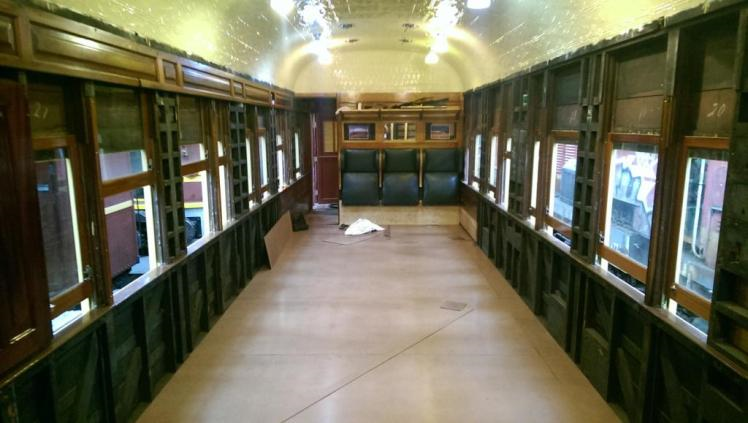
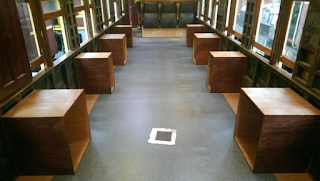
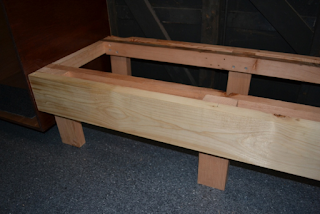
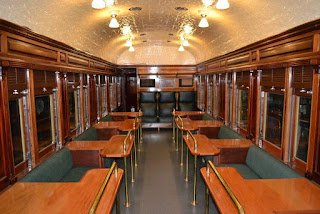
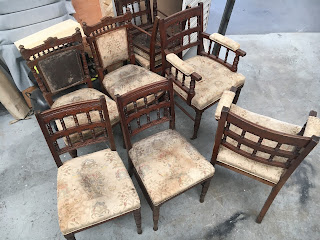
    Further in this post, some pictures of some train carriage seating we have upholstered as part of the refurbishment of the “3801” by Eveleigh Projects. We completed this job a while back but thought it would be a good inclusion with this post.

    Balloon back chairs
    This style of chair was made between c1850 and c1890, and
    were inspired by Continental designs. They were originally intended for the
    salon, rather than as dining chairs, so carvers are extremely rare. The finer
    examples have cabriole front legs and are usually in walnut, but there are also
    many less attractive examples made in their thousands for a mass market. Fakes
    are unlikely as they have always been in plentiful supply and modestly priced.
    However, copies have been known to have been imported from the Far East which
    are heavier than the Victorian originals, and are obvious copies.
    Bergere Chairs
    Bergere Chairs As with many furniture terms, bergere is used
    not altogether correctly. Often featured to describe a particular type of
    armchair and settee with caned sides and back, a bergere was originally any
    armchair with upholstered sides. This particular form of seating first appeared
    in France c1725 and gradually spread in popularity to other European countries
    displacing chairs with open arms. The name is now perhaps most frequently
    applied to a style of chair which was popular during the Regency period: often
    of square form but sometimes with a curved back and having caned sides, back
    and seat (usually fitted with a squab cushion). Similar upholstered examples
    can be found but these usually date from a little later.
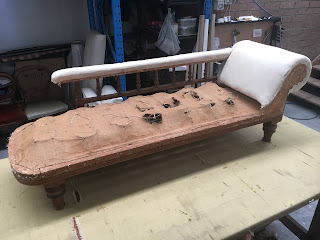
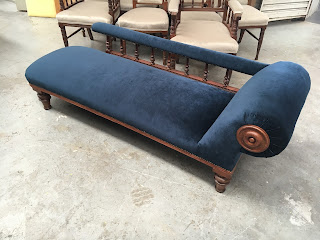
    Chaises Longues & Daybeds
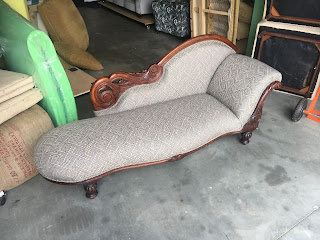
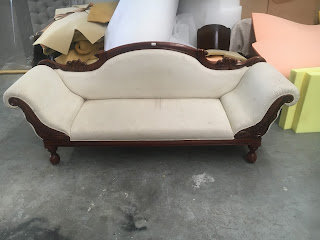
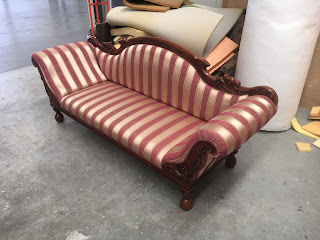
    Chaises Longues & Daybeds The Regency period saw the
    introduction of the chaise longue, a fully upholstered chair with an elongated
    seat and inclined back and arms. They were sometimes made in mirror image
    pairs, with headrests at opposite ends, but are now mostly found as single
    examples. The frames of Victorian chaises longues were often elaborately
    carved.
    Chippendale style chairs
     Chippendale chair
    designs were often copied in the Victorian period, and these copies are now
    very collectable in their own right. Reproductions can be distinguished from
    chairs made during the Chippendale period by the use of exaggerated elements of
    Chippendale style such as very pronounced cabriole legs, an over-elaborate base
    splat, and a large amount of carving. The quality of the carving, though
    competent, is often rather stiff and lifeless, and is shallower than 18thC
    carving with less undercutting. The chair will have a lesser degree of wear
    than period examples, and sometimes were made with corner brackets that were
    not found on chairs until the 19thC. Breaks sometimes occur in the scrolled
    ends of top rails, and a repair would be difficult to disguise against close
    inspection.
    Dining Chairs

    By the second half of the 18thC the dining room had become
    the focal point of any great house. There the main meal of the day was taken
    and the long D-end dining tables which permanently graced the rooms cried out
    for equally ‘long’ sets of chairs to accommodate the diners. Until then meals
    had usually been quite intimate affairs eaten in private apartments off folding
    tables while seated on parlour or side chairs. While breakfast and supper might
    still be taken in that way, by 1800 the importance of the dining room as the
    centre of the house was established, and so it continued through the 19thC.
    Now, despite our reversion to less formal eating habits, the demand for sets of
    dining chairs remains strong with premiums being paid for large sets.
    THE 3801

    Seating upholstered by Cover It Upholstery Sydney


  • AWARD WINNING Cover It Upholstery Sydney

    AWARD WINNING Cover It Upholstery Sydney

    Cover It Upholstery Sydney 


    Welcome to
    our blog! This post is to let you all know Cover It Upholstery Sydney has just
    been voted 12th most popular home improvement business on the site
    “Home Improvement 2Day”.

    It’s always
    good to be appreciated
    J.

    Top 25 Awards
    Cover
    It Upholstery Sydney has been selected as one of our Most Popular Home
    Improvement Specialists!
    Awards
    received for 2016:

    Most Popular Home Improvement Specialists in 2016


    If you are
    interested you may like to visit our website Cover It Upholstery Sydney and
    read some testimonials from some of our customers.


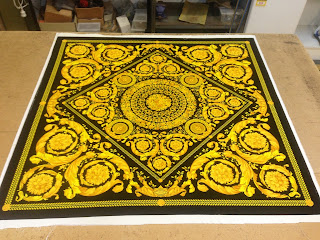
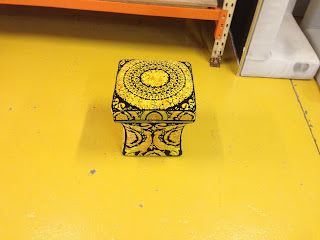
    Here is a photo of a piece of Versace fabric and the small stool we recovered with it.


    Below is
    some info about linen fabrics and how to care for them

    Linen is a pure natural fabric of great beauty with unique
    features, a noble fabric since ancient times, treasured by the Egyptian
    Pharaoh’s before the Europeans and Russians. Linen is derived from the flax
    plant which grows well in cool, damp climates such as found in northern Europe,
    the Baltics and northern Russia. Flax is sown in the autumn and harvested 100
    days later by hand. The flax is left exposed to the sun to weather, then
    washed, scoured and cleaned before being spun into yarn and woven into linen
    fabric. Flax is fully biodegradable and environmentally friendly. Linen is soft
    to handle and comfortable with excellent insulating properties. Quality Linen
    is produced by mills in Europe that have a long tradition in the art of linen
    production and where quality control is strictly maintained.Quality Linens are
    all washed twice at the mill to reduce possible shrinkage.
    Care Instructions

    Most fabrics will fade and eventually wear out which, for
    fabric lovers, is part of their charm. With proper care linen can last for many
    years and be a source of pride and joy to the user. Being of natural fibres,
    small imperfections can sometimes be found such as knobs and slubs which is
    normal, and part of their charm. Shrinkage and stretching can occur so
    allowances of 4% – 6% is recommended to accommodate this. Depending on climatic
    conditions they are more prone to movement, in wet, damp conditions or high in
    humidity. Stretching can occur particularly with heavier weights so we recommend
    that bottom hems not be finished until hung when adjustments can be made. Again
    this is subject to humidity as linen absorbs moisture which can cause the
    problem. Many people prefer to let the curtains balloon onto the floor which is
    a nice generous effect. All curtains should be fully lined to protect them from
    harsh sunlight and furniture should also be protected from direct sun.
    Furniture and curtains should be vacuumed from time to time to prevent dirt
    building up. Washing can be done by hand in a tub or if machine washed
    protected in a bag. Use clean water with a mild detergent at temperature of
    40°. No bleach or chlorine to be used. Stone washed linens are NOT washable and
    should be Dry-cleaned only For stains or marks apply a damp or wet clean cloth
    and rub gently. Do not rub excessively hard as colour can remove. 

  • BRAND NEW AGAIN

    BRAND NEW AGAIN


    Brand new again

    When your furniture is looking tired, out-of-date and
    needing some tender love and care, you can give it a new lease on life with re-upholstery.
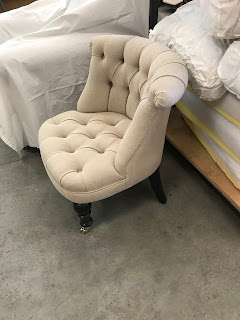
     Re-upholstery is the
    technique of repairing old furniture like recovering a chair, replacing the
    foam inside a seat or repairing the joints. Cover It Upholstery Sydney have
    been in the upholstery industry for more than 30 years but officially
    established in 1998. Our interest for breathing new life back into old furnishings
    was sparked from the love of antiques and restoring old furniture and bringing
    it back to its original condition.

    At Cover It Upholstery Sydney we can restore modem or
    antique furniture, large or small. Some items could take long to do depending
    on the damage. It’s very rare that a piece cannot be restored no matter how
    extensive the damage is, as we can do full restorations to upholstered furniture.
    In the past we have worked on restoring furniture at clubs, restaurants and bars
    as well as worked on many antiques — some more than 250 years old.

    Re-upholstering your old furniture could be a better value
    alternative to buying new furnishings, as there is often nothing wrong with the
    furniture besides worn or dirty fabric so therefore to opt to recover existing
    furniture with any choice of fabrics is the way to go. Knowing that if
    recovering quality furniture you will get 10 to 20 years out of it instead of
    buying something that will need to be replaced in a few years. Also you may be
    disappointed by what is on offer in retail stores.

     Another benefit of
    upholstering old furniture is that it reduces landfill waste as well as the
    number of trees that needed to be cut down to construct furniture pieces. Reupholstering
    old furniture is a way of recycling your old furniture and making it new again.
    Reupholstery also gives you the opportunity to personalise your furniture using
    quality materials and perfected trade techniques that will give you a piece
    that will last a long time.

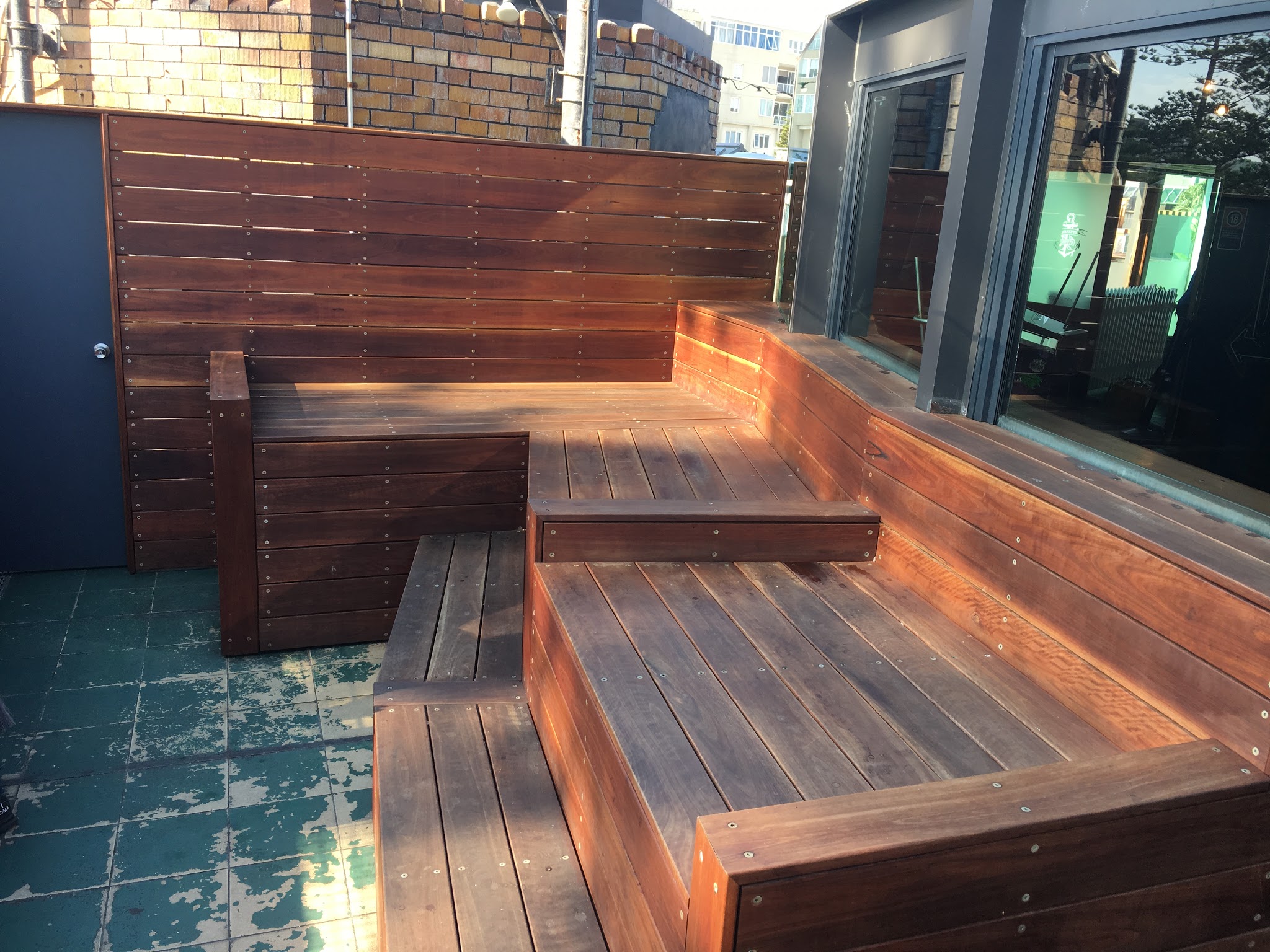
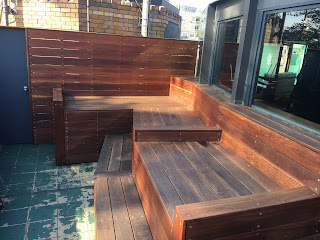
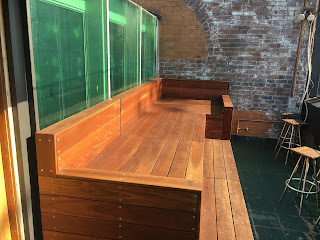
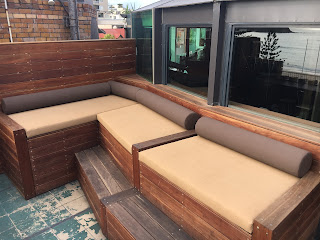
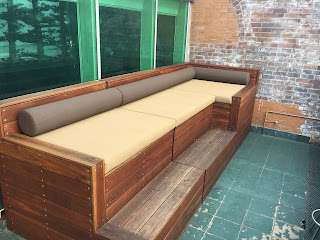
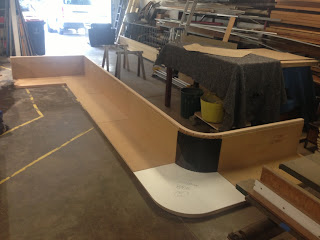
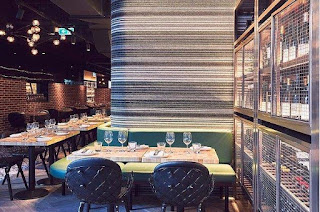
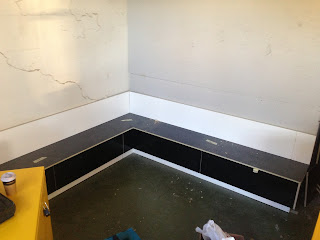
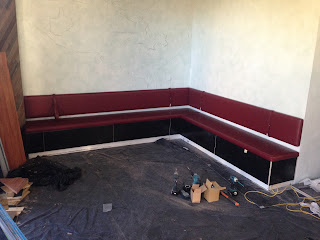
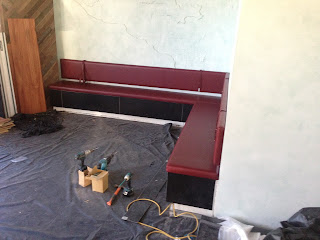
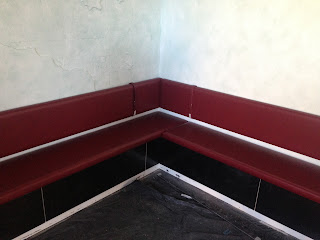
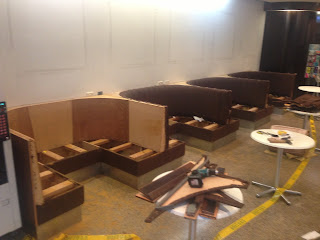
    We do a lot of commercial work consisting of either
    recovering existing furniture or making new. Every year we make a lot of
    banquette seating for various bars and restaurants.

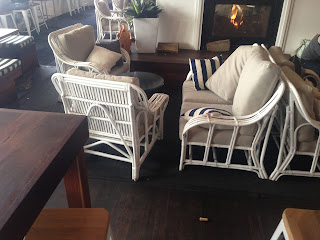
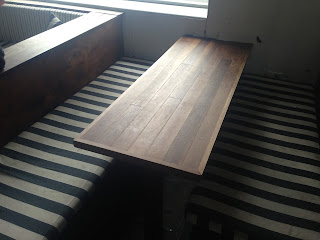
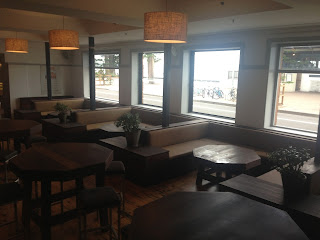
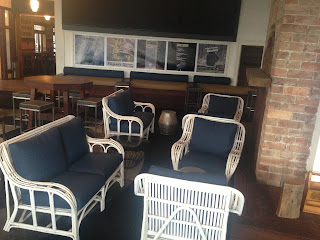
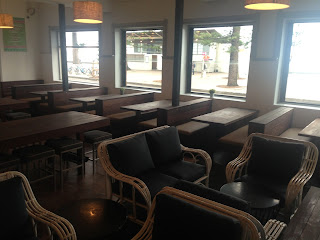
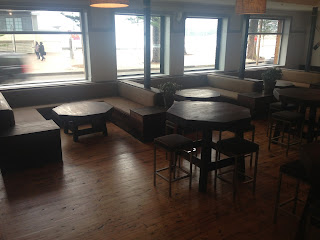
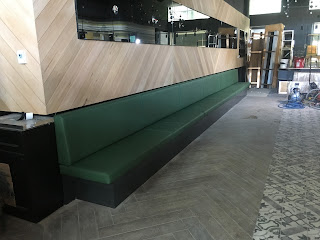
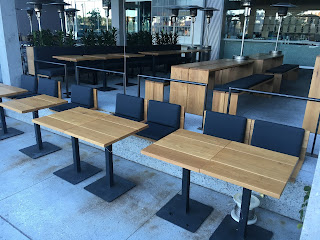
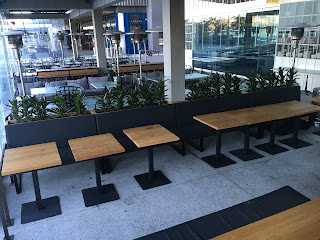
    Below are some examples of some recent work done the second
    half of 2016.


  • BRAND NEW AGAIN

    BRAND NEW AGAIN


    Brand new again

    When your furniture is looking tired, out-of-date and
    needing some tender love and care, you can give it a new lease on life with re-upholstery.
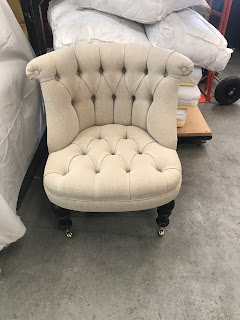
     Re-upholstery is the
    technique of repairing old furniture like recovering a chair, replacing the
    foam inside a seat or repairing the joints. Cover It Upholstery Sydney have
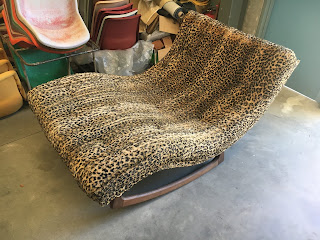
    been in the upholstery industry for more than 30 years but officially
    established in 1998. Our interest for breathing new life back into old furnishings
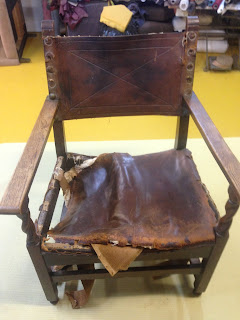
    was sparked from the love of antiques and restoring old furniture and bringing
    it back to its original condition.

    At Cover It Upholstery Sydney we can restore modem or
    antique furniture, large or small. Some items could take long to do depending
    on the damage. It’s very rare that a piece cannot be restored no matter how
    extensive the damage is, as we can do full restorations to upholstered furniture.
    In the past we have worked on restoring furniture at clubs, restaurants and bars
    as well as worked on many antiques — some more than 250 years old.

    Re-upholstering your old furniture could be a better value
    alternative to buying new furnishings, as there is often nothing wrong with the
    furniture besides worn or dirty fabric so therefore to opt to recover existing
    furniture with any choice of fabrics is the way to go. Knowing that if
    recovering quality furniture you will get 10 to 20 years out of it instead of
    buying something that will need to be replaced in a few years. Also you may be
    disappointed by what is on offer in retail stores.

     Another benefit of
    upholstering old furniture is that it reduces landfill waste as well as the
    number of trees that needed to be cut down to construct furniture pieces. Reupholstering
    old furniture is a way of recycling your old furniture and making it new again.
    Reupholstery also gives you the opportunity to personalise your furniture using
    quality materials and perfected trade techniques that will give you a piece
    that will last a long time.

    We do a lot of commercial work consisting of either
    recovering existing furniture or making new. Every year we make a lot of
    banquette seating for various bars and restaurants.

    Below are some examples of some recent work done the second
    half of 2016.


  • COVER IT UPHOLSTERY SYDNEY

    COVER IT UPHOLSTERY SYDNEY

    COVER IT UPHOLSTERY SYDNEY


    We often get asked what the process is when a customer first make contact with Cover It Upholstery Sydney, so thought it would be helpful to post the most frequently asked questions and answers.


    FAQ’s

    Q – HOW DO I GET AN ESTIMATE? – A – Just send an email to [email protected] explaining the job required and some photo’s attached. An estimate can be given but the final firm quote would depend on the fabric selection.

    Q – DO YOU HAVE A SHOWROOM? – A – We have a workshop but this is not a showroom and would come to you to show you fabric samples. We also do not keep furniture there to see as only have the jobs we are currently working on.


    Q – DO YOU SUPPLY FABRIC? – A – We can come to you with fabric samples. You can decide then or if you need more time to decide you can narrow down to a few options of which we can then get cutting sent to you from the suppliers.


    Q – HOW LONG? – A – Once a job is accepted we would require a deposit to book the job in and order any materials. There is generally around 3 to 4 weeks of work booked in at any time. The time that we need to do the job will depend on the job but to give an idea it’s generally 2 weeks for fabric lounge suites, 3 weeks for leather suites, 1 week for dining settings, 1.5 to 2 weeks for armchairs.


    Q – HOW TO CARE FOR FABRIC? – A – Different fabrics require different care and care labels are supplied with the rolls of fabric that come in. We give those to you or you could always just email so we can send to you or visit the fabric suppliers website.


    Q – HOW TO CARE FOR LEATHER? – A – Different leather types require different care. Same as fabric care.


    Q – DO YOU GUARANTEE YOUR WORK? – A – We guarantee all our workmanship for 10 years, not anything else that was not done by us. Fabric suppliers generally guarantee their fabrics for 2 to 3 years for residential use, 1 for commercial. Although we cannot guarantee the frames etc of furniture that we recover which has not been made by us, we do however ensure that we strengthen any frames that need it and add extra padding etc as required so basically make sure the furniture will last structurally as long as we expect the fabric to last.


    Q – DO YOU PICK UP AND DELIVER? – A – We pick up and deliver within Sydney Metro and this is always included in our quotes. If however there is no available parking for a CBD pick up or very difficult access to any residence we use a removalist for those jobs which is at the customer’s cost or the customer can arrange their own transport.


    Q – CAN WE MAKE CHANGES TO THE FURNITURE STYLE/DESIGN? – A – Not all furniture will lend itself to modification but where possible we can do and discuss the possible extra costs involved. 


    Q – DO YOU MAKE FURNITURE – A – We can make any custom made furniture you require. For residential this can be a little expensive as a lot goes into the design of custom furniture, for commercial where large numbers of items are required this becomes more cost effective. 


    Q – DO YOU RE-POLISH WOODWORK? – A – We work closely with our French Polisher and can organise furniture to be stripped and repolished before we recover it. If it’s a dining suite that needs re-polishing we can do just the chairs or also include the table should that need a repolish.


    Q – DO YOU DO SMALL FURNITURE REPAIR JOBS? – A – We generally don do small on-site repair jobs unless we are also doing a recover job for you. We can do it but then need to charge a call-out fee of $150 + GST + the cost of the repair.


    Q – DO YOU HAVE EXPERIENCE WITH ANTIQUE FURNITURE? – A – At Cover It Upholstery Sydney we can re-upholster any antique furniture you have. We have worked on furniture of over 200 years old. We can upholster any furniture from antiques to today’s modern furniture.


    Q – HOW LONG HAVE YOU BEEN IN THE TRADE? – A – This is a question that gets asked from time to time and is understandable as people can be a little nervous to whom they are trusting their valued piece of furniture. At the time of writing this post I’ve been in the trade for 27 years, most of our tradesmen have at least the same experience or longer and therefore there isn’t any furniture that we have not come across or cannot upholster. Some furniture is off course more challenging than others but this is actually what make the trade interesting and gives great satisfaction once transformed into the finished piece. We are perfectionists!!.


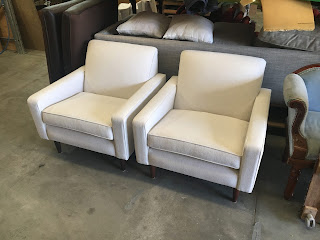
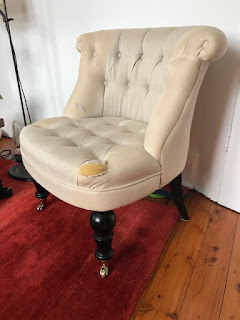
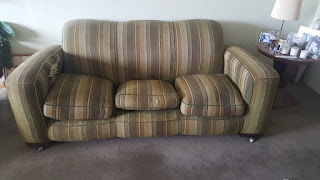
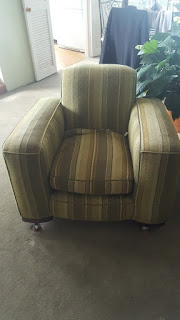
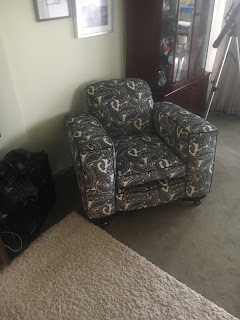
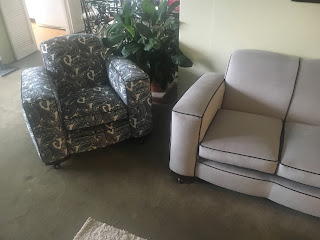
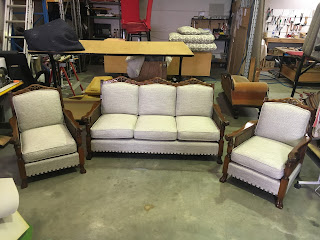
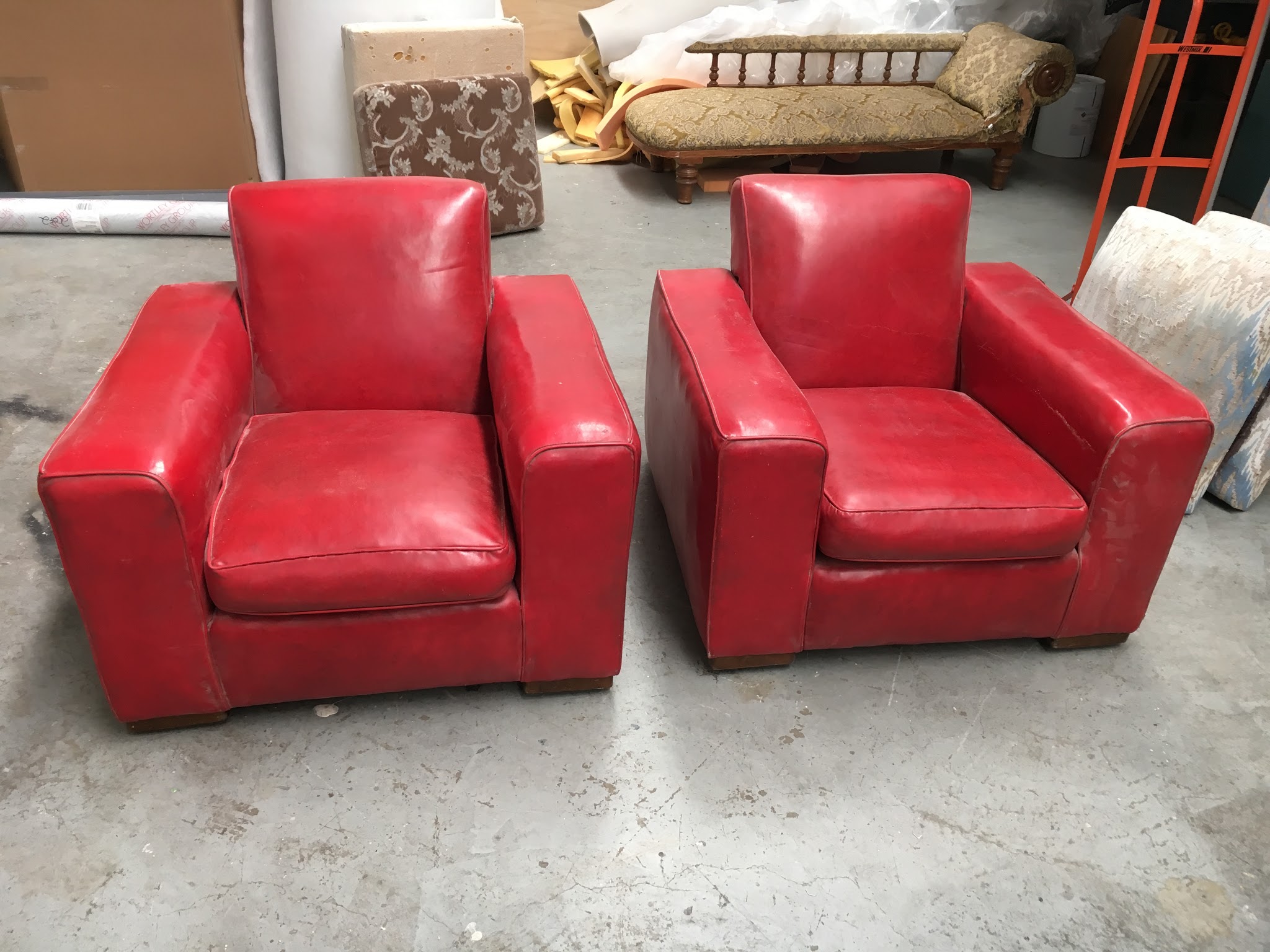
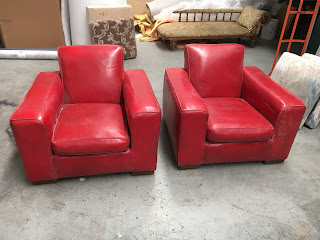
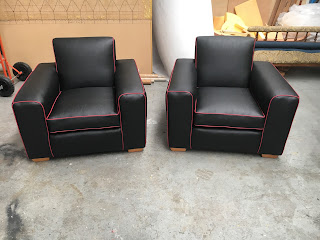
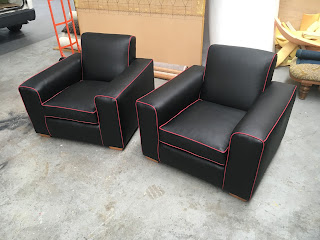
    Below are a few before and after photo’s of a recent job where we had to re-spring the seats, re-pad, and we had the metal strips on the arms nickel-plated and cup holders on arms re-polished with black trim as per original.
    The 5-seater sofa was far to big for us to carry up and down the customers stairs so the customer organised the pick up and delivery with a removalist he has known for several years and were the ones who got the furniture up to the apartment when first moved in.

                                                      5-SEATER CLUB LOUNGE BEFORE

                                                                   
                                                                CLUB CHAIR BEFORE

                                                      3-PC CLUB LOUNGE SUITE AFTER